

Pick up a coin from a modern U.S. Mint release, and you’ll find it nestled inside a plastic capsule, tucked into a velvet-lined box, accompanied by a Certificate of Authenticity. Pull a graded coin off a dealer’s shelf, and it arrives sealed in a tamper-evident holder with a barcode and grade printed right on the label. Buy a raw bullion coin in quantity, and it might come loose in a tube with no frills at all. The way a coin is packaged says a lot about its origin, its condition, and its intended audience. This guide breaks down the most common types of coin packaging, what each one means, and the pros and cons of each for collectors and investors.
Why Coin Packaging Matters
Packaging isn’t just about presentation. It directly affects a coin’s long-term preservation, its resale value, and the confidence a buyer has when purchasing sight-unseen. The wrong storage can cause environmental damage, such as toning, spotting, or hairlines, that could reduce a coin’s grade and market value. The right packaging protects the coin’s surfaces, documents its origin, and in some cases adds a collectible premium of its own. For a deeper look at what condition means for value, see our introduction to coin grading.
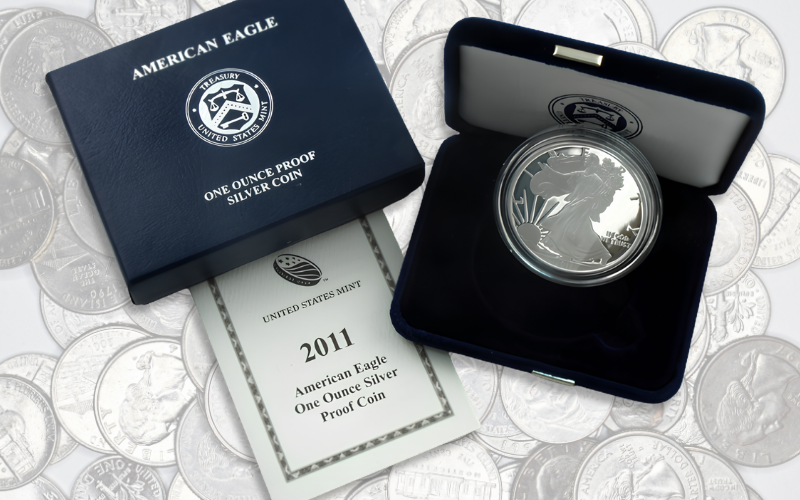
Original Government Packaging (OGP): Straight from the Mint
When the U.S. Mint or another sovereign mint ships a coin to a buyer or dealer, it comes in what collectors call Original Government Packaging, or OGP. This typically includes a presentation box, a plastic capsule holding the coin, and a Certificate of Authenticity (COA). For proof and collector-grade issues, the packaging is often designed to be as much a part of the experience as the coin itself, think leatherette cases, custom foam inserts, and printed booklets.
Pros:
- Preserves collectible completeness. A coin with its original box and COA is considered “complete,” which matters to collectors and commands a premium on the secondary market.
- Establishes provenance. OGP documents where the coin came from and when it was issued, adding context and authenticity.
- Display-ready. Mint packaging is designed for presentation and often doubles as an attractive display case.
Cons:
- Bulky for storage. Full OGP boxes take up considerably more space than a slabbed coin or a capsule alone, which matters for large collections.
- Variable protection quality. Some mint-issued capsules fit loosely, allowing a coin to shift and develop contact marks over time.
- Less important for common bullion. For standard bullion coins, buyers often place more emphasis on metal content, authenticity, and condition than original packaging. In many cases, OGP adds little additional premium compared with proper protective storage.
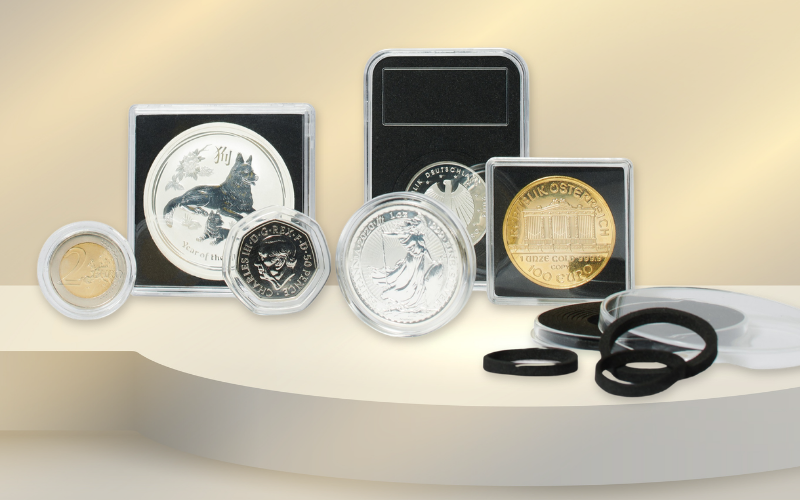
Coin Capsules: Everyday Protection for Raw Coins
Coin capsules are rigid, clear plastic holders that encase an individual coin, protecting its surfaces from fingerprints, dust, and environmental exposure without the bulk of a full OGP. They’re sized to fit specific coin diameters and are one of the most common storage options for raw coins that aren’t in OGP or a grading slab. Browse our coin collecting accessories for a selection of capsules and storage solutions.
Pros:
- Affordable and accessible. Capsules are inexpensive and available in standard sizes to fit virtually any denomination or bullion coin.
- Clear visibility. Both sides of the coin are visible without removing it from the holder, reducing unnecessary handling.
- Compact. Capsules take up far less space than OGP boxes and can be stored in trays, tubes, or albums.
Cons:
- No grade guarantee. A capsule provides no authentication or condition assessment; it simply protects what’s inside.
- Sizing matters. An oversized capsule can let the coin slide and cause edge-contact marks. Always match the capsule diameter to the coin.
- No collectible premium. Unlike OGP, a generic capsule adds no market value beyond the protection it provides.
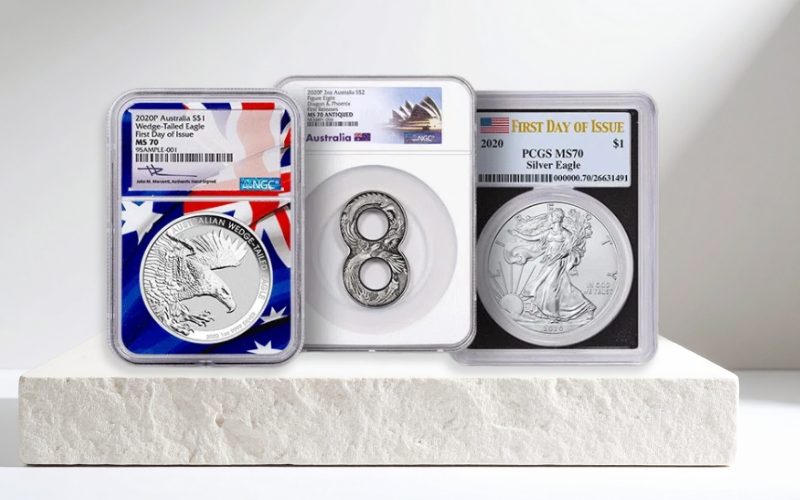
Slabs: The Standard for Graded Coins
A “slab” is the term collectors use for the sealed, tamper-evident holder issued by professional grading services such as PCGS and NGC. When a coin is submitted, it is authenticated, graded on the 70-point Sheldon scale, and sealed in a durable plastic holder with a label identifying the coin, grade, and a unique certification number that can be verified online.
Grading services also offer special release designations and labels that may appeal to collectors. Examples include First Strike® (PCGS) and Early Releases® or First Day of Issue® (NGC), which identify coins submitted within specific release windows. Depending on collector demand, these designations may add market appeal or premium value.
Pros:
- Authenticated and graded. A slab provides an independent, standardized assessment of a coin’s authenticity and condition, which is the clearest signal of quality available to buyers.
- Tamper-evident security. The sealed holder makes it immediately apparent if anyone has attempted to swap or alter the coin inside.
- Market liquidity. Slabbed coins from PCGS and NGC are widely trusted across the collector community, making them easier to buy and sell with confidence.
- Long-term preservation. Slabs are designed to protect coin surfaces for decades when stored properly.
- Organized storage. Slabbed coins can be kept in purpose-built holders like the MCM certified coin storage boxes designed to hold NGC and PCGS slabs stacked and securely
Cons:
- Submission cost. Grading fees can range from modest to significant, depending on service level, making slabbing less practical for lower-value coins.
- Original packaging may become less important. Because coins must be removed from mint packaging for grading, some collectors no longer prioritize OGP once a coin is certified—though others still prefer to keep it for completeness.
- Not always necessary. Common bullion coins and lower-value issues do not always justify grading costs unless exceptional condition, rarity, or collector demand supports a premium.
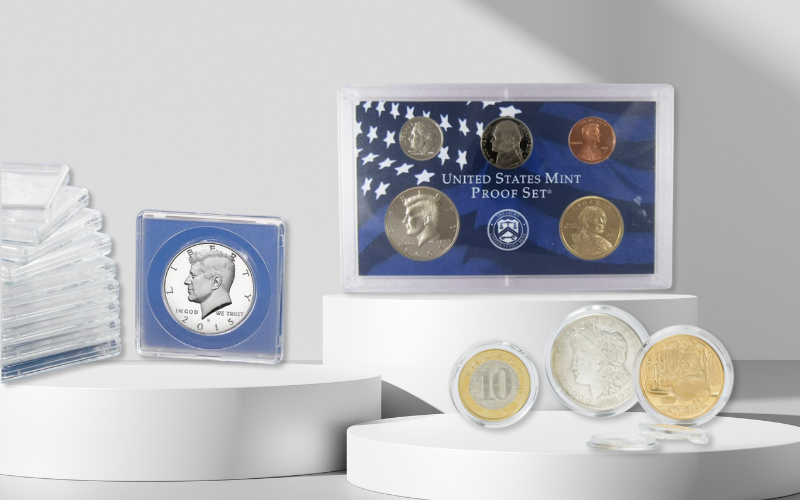
Which Packaging Is Right for Your Coins?
The right choice depends on the coin and your collecting goals. For many modern U.S. Mint collector products—such as proof sets, commemoratives, and limited-edition releases—keeping the coin in its Original Government Packaging (OGP) with the Certificate of Authenticity (COA) intact can help preserve collector appeal and future resale potential.
For bullion coins primarily held for metal value, a properly sized capsule or other secure storage solution is often sufficient protection against handling and environmental exposure.
For key-date coins, scarce issues, or coins where condition plays a major role in value, professional grading through services like PCGS or NGC can remove uncertainty through authentication and standardized grading while providing long-term protection.
Many collectors also wrestle with whether to remove a coin from OGP for grading. If a coin appears likely to receive a high grade, the potential premium may outweigh any value tied to original packaging. However, grading fees, market demand, and the loss of the original mint presentation should all factor into the decision, making it worth careful consideration.
Find the Right Coin Packaged the Right Way at ModernCoinMart
Whether you’re looking for a modern proof in its original mint packaging, a PCGS or NGC certified key-date piece, or raw bullion ready for your capsule collection, ModernCoinMart carries coins across every packaging type and price range. Explore our coin collecting accessories for storage solutions, or browse our full inventory of graded and ungraded coins to find the right addition to your collection.
Frequently Asked Questions About Coin Packaging
What does OGP mean in coin collecting?
OGP stands for Original Government Packaging, the packaging a sovereign mint includes when selling certain coins and collector products. Depending on the issue, OGP may include a presentation box, protective capsule, outer packaging, and a Certificate of Authenticity (COA).
For many modern collector coins—such as proof issues, commemoratives, and limited-edition releases—keeping the coin in its OGP is often preferred because it preserves the set’s completeness and may enhance collector appeal or resale value on the secondary market.
Does a coin lose value if it’s removed from its OGP?
It can, depending on the coin. For many limited-edition commemoratives, proof coins, and special collector releases, intact Original Government Packaging (OGP) and a matching Certificate of Authenticity (COA) contribute to collector appeal and a sense of completeness.
Removing a coin from its OGP for grading changes that original presentation, though many collectors still retain the box and COA alongside the certified coin. In some cases, a strong grade from PCGS or NGC may more than offset any lost OGP premium—especially if the coin receives a top grade. However, grading fees and market demand should also factor into the decision.
What’s the difference between a coin capsule and a slab?
A capsule is a generic, clear plastic holder that protects a coin’s surfaces without providing any authentication or grading information. A slab is a sealed, certified holder issued by PCGS or NGC that documents the coin’s grade and authenticity after professional review. Slabs provide a higher level of assurance and are the standard for the collector market.