

The American West of the late 19th century was a land of contrasts: cattle drives and mining camps, rapidly growing railroad towns, and frontier communities where fortunes could be made or lost. From Dodge City to Tombstone, commerce helped drive the expansion of the American frontier, and money was essential to everyday life.
Between 1865 and 1890, coins passed through the hands of miners, merchants, ranchers, railroad workers, and travelers. Alongside paper money and other forms of payment, these coins offer a tangible connection to a transformative period in American history. Explore the coinage of the Wild West, the economic forces that shaped its circulation, and the reasons these pieces continue to interest collectors today.
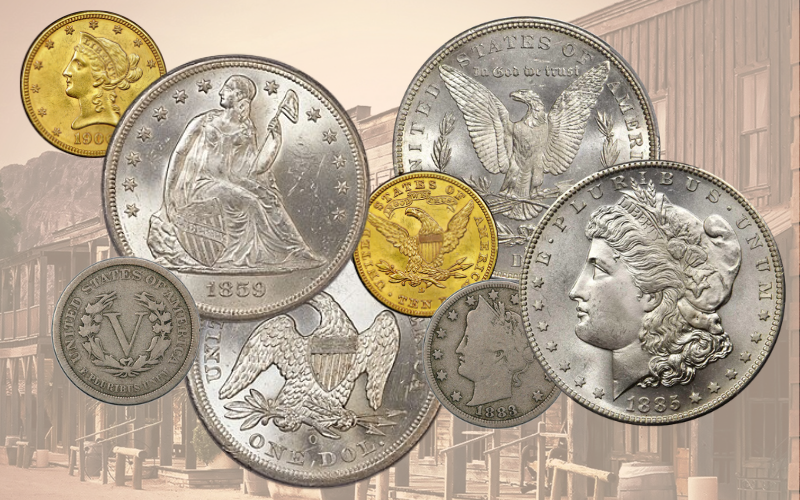
The Economy of the Frontier
The post-Civil War West relied on a mix of barter, paper currency, and gold and silver coinage. In many Western communities, precious-metal coins played an important role in commerce, particularly when confidence in paper money varied by region. Gold coins remained familiar in the West, while silver mining helped shape debates over the nation’s monetary system.
The discovery of Nevada’s Comstock Lode in 1859 brought enormous quantities of silver into the American economy and intensified debates over silver coinage. Those debates helped lead to the Bland–Allison Act of 1878, which authorized the return of the standard silver dollar and paved the way for the Morgan Silver Dollar, designed by George T. Morgan and first struck that year.
Meanwhile, gold discoveries in California and Colorado helped establish the West as a major center of precious-metal production. Gold coins, silver dollars, and other denominations circulated alongside paper money, reflecting the changing needs of a growing economy. Today, these coins offer collectors a tangible connection to the mining booms, monetary debates, and expanding communities that shaped the American West.
The Coins of the Frontier
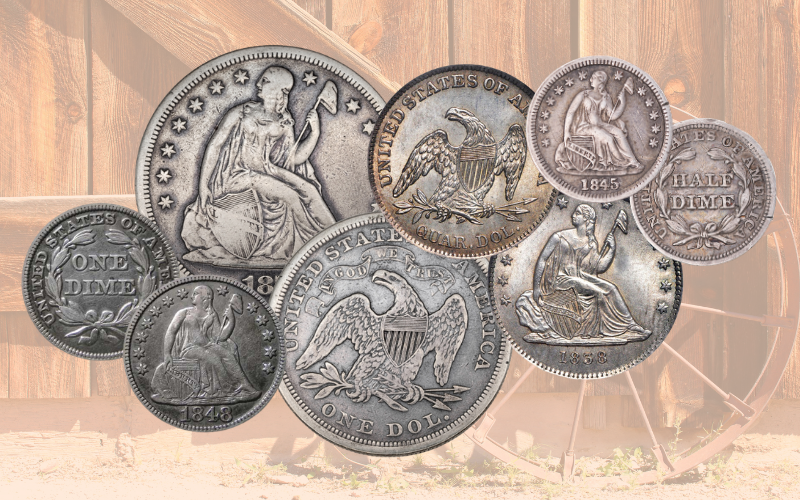
Seated Liberty (1836–1873)
Designed by Christian Gobrecht from concepts developed by artist Thomas Sully and other Mint personnel, the Seated Liberty design appeared on several U.S. silver denominations, including half dimes, dimes, quarters, half dollars, and silver dollars. The design first appeared on circulating silver coinage in 1837 and became a familiar sight during a period of westward expansion, the Civil War, and Reconstruction.
The Coinage Act of 1873 ended production of the standard silver dollar and authorized the Trade Dollar, which was created primarily to facilitate commerce with Asia. Seated Liberty designs continued on some other denominations beyond that year, but the end of the silver dollar marked an important transition in American coinage. Today, Seated Liberty coins interest collectors for their classical design, historical significance, and the variety of dates, mint marks, and types available across the series.
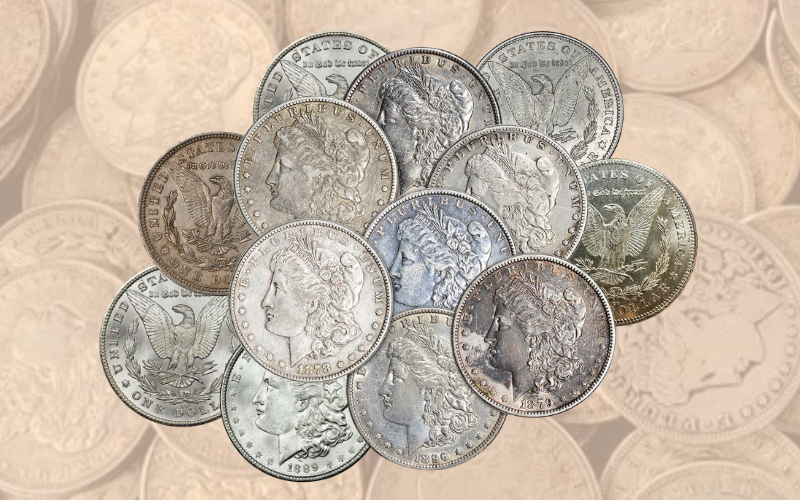
Morgan Silver Dollar (1878–1904)
Few coins are more closely associated with the Wild West than the Morgan Silver Dollar. Following passage of the Bland–Allison Act in 1878, the U.S. Treasury was required to purchase a specified amount of silver each month and have it coined into silver dollars. The resulting Morgan dollar became one of the most recognizable coins in American numismatics. Designed by U.S. Mint Assistant Engraver George T. Morgan, its obverse features Liberty wearing a cap, while the reverse depicts a heraldic eagle.
- 90% silver: Morgan dollars contain 90% silver and 10% copper. They were struck at Philadelphia, New Orleans, San Francisco, and Carson City during the original series. Denver joined the series in 1921.
- Carson City (CC) mint mark: The Carson City Mint was established to serve the region’s silver-mining industry, particularly the Comstock Lode. Morgan dollars bearing the CC mint mark are especially popular with collectors for their Western history and the mint’s distinctive place in American coinage.
- Notable dates: The 1893-S is a key date, while the 1895 Philadelphia issue is famous because no circulation-strike examples are known, despite historical Mint records indicating business-strike production. The 1884-S is particularly challenging to find in high Mint State grades.
Explore ModernCoinMart’s Morgan Silver Dollar inventory to discover available examples across dates, mint marks, and grades.
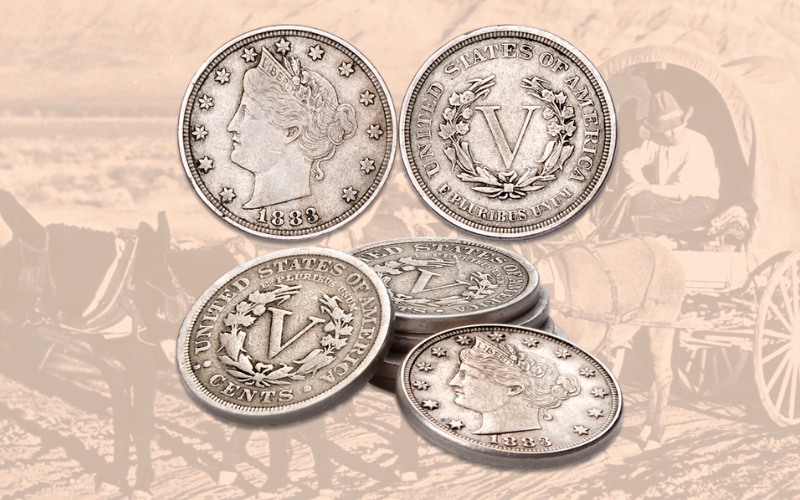
Liberty Head “V” Nickel (1883–1913)
Introduced in 1883, the Liberty Head Nickel—often called the “V Nickel” for the large Roman numeral five on its reverse—was a familiar five-cent coin during the later years of the American frontier era. Designed by U.S. Mint Chief Engraver Charles E. Barber, the coin features a left-facing portrait of Liberty surrounded by 13 stars on the obverse and a wreath encircling the Roman numeral V on the reverse.
The first 1883 nickels omitted the word “CENTS,” leaving the Roman numeral V as the only indication of denomination. Because the coin was similar in size to a five-dollar gold piece, opportunists gold-plated some examples and passed them off as $5 coins. The Mint responded by revising the reverse to include the word “CENTS” later that year. Today, both the 1883 “No Cents” and “Cents” varieties interest collectors, with desirability depending on condition, authenticity, and collector demand.
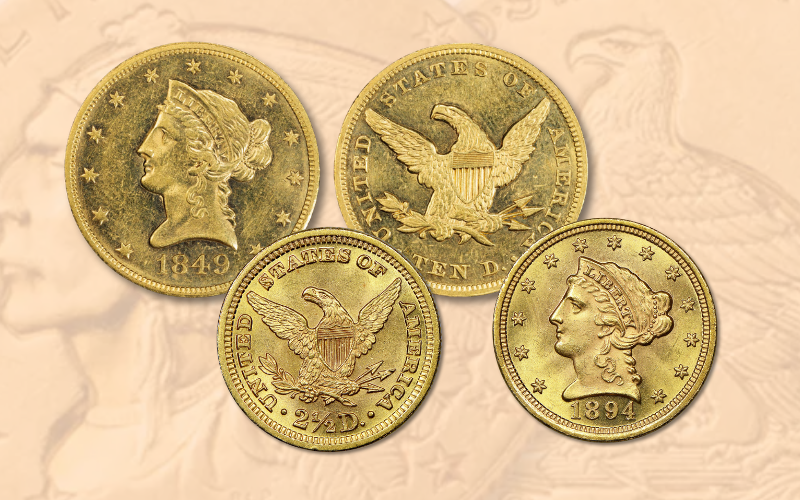
Liberty Head Gold Coins
Gold coins played an important role in commerce across the American West, particularly following the California Gold Rush and later discoveries in Colorado, Nevada, and other mining regions. The Liberty Head, also known as the Coronet design, appeared on several U.S. gold denominations during the 19th century, including the $2.50 quarter eagle, $5 half eagle, $10 eagle, and $20 double eagle. These coins offer a tangible connection to the mining booms and economic growth that shaped the frontier.
- $20 Double Eagle: Introduced in 1850 following the California Gold Rush, the double eagle was the highest-denomination regular U.S. gold coin of its time. Its substantial face value made it useful for large payments and financial transactions.
- $10 Eagle and $5 Half Eagle: These denominations served a range of commercial needs, from business payments to larger everyday transactions. Their use varied with local economic conditions and the availability of coinage.
- Collecting Liberty Head Gold Today: These coins appeal to collectors for their gold content, historical significance, and variety of dates and mint marks. Some examples carry substantial numismatic premiums depending on rarity, condition, and demand. Professional certification by services such as PCGS or NGC can help establish authenticity and grade, particularly when evaluating higher-value or potentially counterfeit coins.
Frequently Asked Questions: Wild West Coinage
Why was the Morgan Silver Dollar associated with the Wild West?
The Morgan Silver Dollar became closely associated with the American West during the silver-mining boom of the late 19th century. Following passage of the Bland–Allison Act in 1878, the U.S. Treasury was required to purchase a specified amount of silver each month and have it coined into silver dollars. The Comstock Lode in Nevada was an important source of American silver during this period, helping connect the coin to the region’s mining history.
Morgan dollars were struck at several U.S. Mint facilities, including the Carson City Mint, which operated near Nevada’s major silver-mining districts. With their connection to Western mining, commerce, and the expansion of frontier communities, these coins became enduring symbols of the era. Today, Morgan dollars bearing the Carson City (CC) mint mark are especially popular with collectors interested in the history of the American West.
What replaced the Seated Liberty dollar?
The Coinage Act of 1873 ended production of the Seated Liberty silver dollar and authorized the Trade Dollar, a slightly heavier silver coin intended primarily for international commerce, especially trade with China. The change came amid shifting U.S. monetary policy and growing debate over the role of silver in the nation’s economy.
In 1878, the Bland–Allison Act authorized renewed production of the standard silver dollar, leading to the introduction of the Morgan Silver Dollar. Although the Trade Dollar and Morgan dollar briefly overlapped in production, they served different purposes: the Trade Dollar was designed with overseas commerce in mind, while the Morgan dollar became a familiar part of domestic American coinage.
What is the “no cents” Liberty Head Nickel?
When the Liberty Head Nickel debuted in 1883, its original reverse featured a large Roman numeral V to represent five cents but omitted the word “CENTS.” Because the coin resembled certain gold coins in size, some individuals gold-plated examples and fraudulently passed them off as five-dollar gold pieces.
The U.S. Mint revised the design later that year, adding “CENTS” to make the denomination clearer. Today, the original 1883 “No Cents” nickel remains a popular collectible, with its appeal depending on factors such as condition, authenticity, and collector demand.
Are Wild West-era gold coins a good investment?
Liberty Head gold coins offer collectors a combination of precious metal content, historical significance, and numismatic appeal. Their market prices can vary considerably depending on the coin’s denomination, date, mint mark, condition, rarity, and collector demand. While some examples command substantial premiums, coin prices can fluctuate, and appreciation is never guaranteed.
For those exploring the market, learning how to evaluate authenticity, condition, and pricing is an important first step. Coins certified by established grading services can provide an independent assessment of authenticity and grade, although certification alone does not guarantee a particular value or future performance. Read our guide on why you should buy graded coins to learn more.
Explore Frontier-Era Coins at ModernCoinMart
From the familiar heft of a Morgan Silver Dollar to the impressive scale of a Liberty Head Double Eagle, the coins of the American frontier offer a tangible connection to the people, places, and economic forces that shaped the Wild West. Each coin tells part of the story of a nation transformed by westward expansion, mining booms, and growing commerce.
Explore ModernCoinMart’s selection of Morgan Silver Dollars, U.S. silver coins, and U.S. gold coins to discover historic designs and collectible pieces connected to America’s frontier era.