

Nearly every coin you’ve ever held was shaped by a die. Not the coin itself but the hardened steel tool pressed against a planchet with enough force to transfer an intricate design in a fraction of a second. Coin dies are the unsung technology behind numismatics: invisible in the finished product, but responsible for everything you see on its surface. Understanding how they work and how they evolved gives collectors a deeper appreciation for every coin they handle, and opens the door to one of the hobby’s most specialized pursuits: die variety collecting.
What Is a Coin Die?
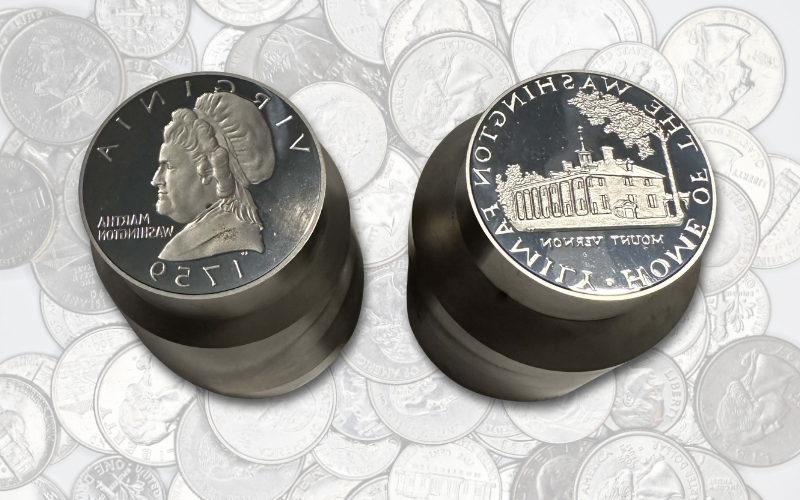
A coin die is a hardened steel tool engraved with a design in negative relief that transfers a positive image onto a prepared planchet when struck under immense pressure. Like a photographic negative, the recessed details of the die create the raised design elements that appear on the finished coin.
Traditional coin production uses two dies:
- Obverse die (hammer die): The upper die that typically moves during striking and carries the coin’s portrait or primary design.
- Reverse die (anvil die): The lower die that holds the planchet in place and features the reverse design.
During striking, the two dies press the planchet with tremendous force, causing the metal to flow into the engraved details. The result is a finished coin featuring a positive relief design transferred from the two negative impressions of the dies.
A Brief History of Coin Dies
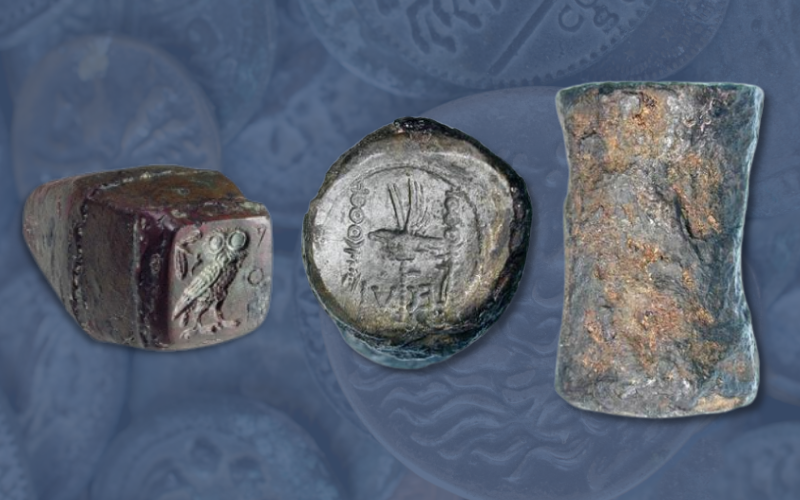
Coin die technology has evolved dramatically over more than 2,700 years, but the fundamental principle has remained the same: a hardened tool transfers a design onto a metal planchet through pressure.
- Ancient world (600 BCE–500 CE): Coin dies were individually hand-carved by skilled artisans, often working in bronze or iron-based metals. Modern numismatists refer to these craftsmen as celators. The obverse die was typically fixed into an anvil, while the reverse die was placed above the planchet and struck with a hammer. Because every die was individually engraved, no two ancient coins are exactly alike. Reverse dies generally wore out faster than obverse dies because they absorbed repeated hammer strikes, causing mints to pair a single obverse die with multiple reverse dies over time. Today, these die-link relationships help researchers establish the chronology of ancient coin issues.
- Medieval period: Hand-struck coinage continued throughout the medieval era, but mints increasingly standardized planchet weights and die production to improve consistency and reduce counterfeiting and clipping. The introduction of the screw press during the 16th century brought greater uniformity and efficiency to coin production, beginning the transition away from traditional hammer striking.
- Industrial era (18th–19th century): Steam-powered coining presses, adopted by major mints in the early 19th century, transformed coin production by allowing larger quantities of more consistent coins to be struck. Mechanical methods for producing dies and hubs reduced variation, though skilled craftsmanship remained an important part of the process.
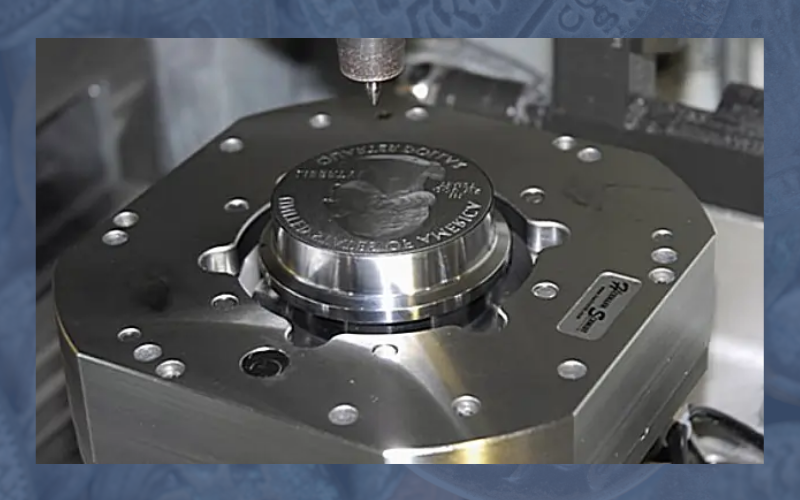
- Modern production: Today’s mints use advanced technologies including computer-aided design (CAD), CNC machining, and laser engraving, to create highly detailed coin designs. The U.S. Mint develops coin designs through a series of master models, hubs, and dies before producing the working dies used to strike coins. See the U.S. Mint’s die-making process for a detailed breakdown of modern die production.
The Hub-and-Die System: How Modern Dies Are Made
The hub-and-die system is the foundation of modern coin production, allowing mints to reproduce detailed designs consistently across millions of strikes. While modern technology has evolved, the basic concept remains a carefully controlled process of transferring a design from positive to negative forms before creating the dies used to strike coins.
- Master hub: A precisely created positive image of the coin’s design, featuring raised details that match the final appearance of the finished coin.
- Master die: Produced from the master hub, this tool contains a negative impression of the design and serves as the source for creating additional hubs.
- Working hub: Created from the master die, this positive image is used to produce multiple working dies.
- Working dies: The final dies installed in coin presses to strike production coins. Depending on the coin type, metal composition, and striking standards, a working die may produce thousands or even hundreds of thousands of coins before being retired due to wear.
This generational chain means the master design is never at risk of wear and stress during production. Working dies wear out; the master hub never touches a coin planchet.
Why Coin Dies Matter to Collectors
Understanding coin dies is practical knowledge for any serious collector. The way a die is created, used, and eventually worn can directly affect a coin’s rarity, appearance, and value. Three areas where die knowledge plays an important role include:
- Die varieties: Small differences between individual working dies can create collectible varieties that carry significant premiums over common examples. These include doubled dies, historical repunched mint marks, and minor design variations. The 1955 Doubled Die Lincoln cent and the 1972 Doubled Die Lincoln cent are among the most famous U.S. examples.
- Die errors and die-related varieties: Problems involving dies or the striking process, can create unusual coins, including rotated dies, die clashes, and brockages. Understanding how dies function is essential for identifying and attributing these unusual pieces.
- Die state: As a working die strikes thousands of coins, its surface gradually changes, developing characteristics such as cracks, chips, polishing lines, and flow lines. Coins struck early in a die’s life often display sharper details, while later die state examples may show visible signs of die deterioration. Some collectors specifically seek these changes because they document a die’s progression over time.
Frequently Asked Questions About Coin Dies
What is the difference between a hub and a die?
A hub and a die are two different stages in the coin production process. A hub carries the coin’s design in positive relief, with raised details that match the final appearance of the finished coin. A die contains the design in negative relief (incuse), creating the mirror-image impression used to strike coins.
The hub is used to create dies, which are then installed in coin presses and struck against prepared planchets to transfer the design onto the finished coin.
Why do reverse dies wear out faster than obverse dies?
In traditional hand striking, such as ancient coin production, the die that received the repeated hammer blows was typically the reverse (or punch) die. This repeated impact subjected the die to significant mechanical stress, causing it to wear more quickly than the fixed obverse (anvil) die. As a result, mints often paired a single obverse die with multiple reverse dies over the life of a coin issue.
In modern automated coin presses, both dies experience substantial forces and wear, but reverse dies often still require replacement more frequently due to differences in design complexity, metal flow, and striking conditions. These patterns of die wear help numismatists study die states and establish relationships between coins struck from the same dies.
What is a die variety and why do collectors care?
A die variety is a coin produced from a die that contains a distinct, identifiable difference from the standard design, such as a doubled die, repunched date, or a repositioned design element. Because die varieties are created from individual dies, they represent a specific population of coins produced before that die was retired. This can create collectible interest and, in some cases, significant premiums over more common examples of the same date and type.
The value of a die variety depends on factors such as rarity, collector demand, and condition. Our introduction to coin grading explains how a coin’s condition can influence its overall desirability and value.
Explore Coins at ModernCoinMart
Whether you’re drawn to the handcrafted character of ancient coins struck using traditional hand-held dies, the sharp details of early die state examples from classic U.S. issues, or the precision of modern proof coinage, ModernCoinMart offers coins spanning every era and collecting category. Explore our U.S. coin inventory or browse our selection of graded coins to discover pieces that showcase the evolution of minting technology and the artistry behind every strike.