

The story of how America moved from jingling pockets full of gold and silver coins to paper bills isn’t a tale of sudden revolution; it’s one of gradual evolution. For over a century, the United States relied primarily on precious metal coinage, but economic pressures, wartime demands, and shifting monetary policy gradually transformed how Americans exchanged value. Understanding the evolution of US currency reveals not just what changed, but why change became inevitable. The transition from gold and silver coins in US history to our modern paper-based system happened in deliberate stages, each responding to the practical needs of a growing economy.

Gold and Silver Coins in Early U.S. History
When Congress passed the Coinage Act of 1792, it established a bimetallic standard that defined the young nation’s monetary system. Both gold and silver coins became legal tender, with their value tied directly to their precious metal content. This approach made intuitive sense to early Americans; coins held intrinsic worth that transcended government decree, and precious metals enjoyed universal acceptance in international trade.
However, a coin-based monetary system carried significant limitations. Precious metals were inherently scarce, restricting the money supply as the economy expanded. Transporting large quantities of heavy coins proved cumbersome and dangerous, particularly as commerce spread across vast distances. Perhaps most critically, an economy dependent on physical metal lacked the flexibility to respond quickly to financial crises or changing economic conditions. These practical constraints would eventually push America toward alternative forms of currency.
Early Experiments With Paper Money
The introduction of paper money in the US actually predated the Constitution. Colonial governments issued paper notes, and the Continental Congress printed Continental Currency to finance the Revolutionary War. These early experiments ended disastrously. Without adequate backing or redemption mechanisms, governments printed excessively, causing rapid inflation. Continental Currency became so worthless that “not worth a Continental” entered American slang as an expression of utter valuelessness.
This failure created deep-seated skepticism toward unbacked paper currency that would influence American monetary policy for generations. The lesson seemed clear: paper money without a solid backing in precious metals couldn’t be trusted. This collective memory would shape how the United States eventually approached the gradual transition away from metallic currency, ensuring that early paper money earned trust by maintaining direct connections to gold and silver reserves.
The Gold Standard and the Rise of Paper Currency
The history of US paper money as a reliable medium of exchange began when the government issued notes backed by precious metal reserves. Gold certificates and silver certificates represented claims on actual metal held in government vaults; they were paper representations of tangible wealth, not replacements for it. National banks issued standardized notes, creating more consistency in paper currency while maintaining the crucial link to metallic value.
The creation of the Federal Reserve System in 1913 marked a pivotal moment in American monetary evolution. The Fed centralized control over currency issuance and began actively managing the money supply to promote economic stability. Federal Reserve Notes gradually became the dominant form of paper currency, though they remained theoretically redeemable for gold. During this era, paper money functioned alongside coins in daily commerce, with each form serving different transactional needs. Large purchases and long-distance payments increasingly relied on paper, while coins remained common for smaller, everyday exchanges. The system worked because Americans trusted that paper bills represented real value stored elsewhere.
Leaving Gold and Silver Behind
The Great Depression shattered the comfortable coexistence of precious metal backing and paper currency. In 1933, facing massive bank failures and gold hoarding, President Franklin Roosevelt suspended gold redemption for domestic currency and required citizens to surrender gold coins. This emergency measure effectively ended gold coins in circulation, though the government maintained a modified gold standard for international transactions.
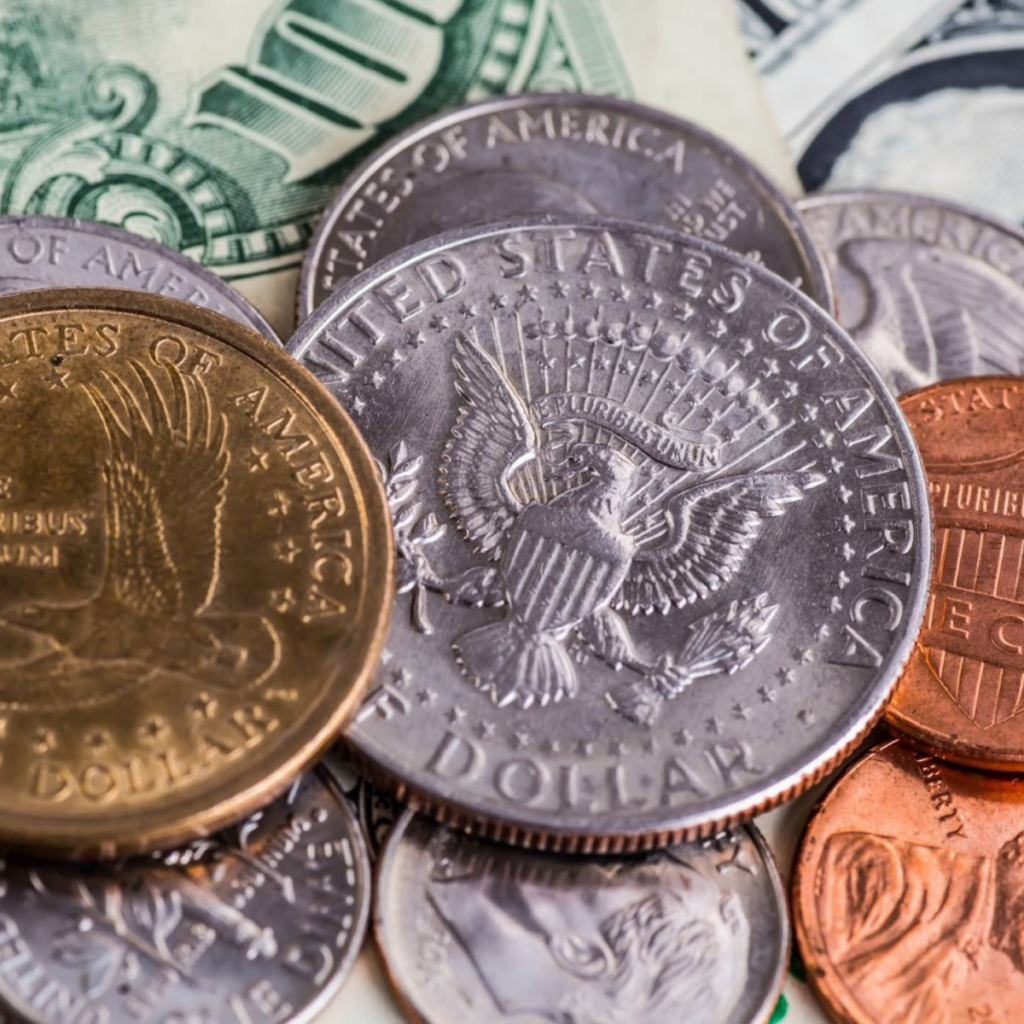
Silver’s departure from everyday currency came more gradually. The evolution of US currency accelerated in the 1960s when rising silver prices made coins worth more as metal than as money. The Coinage Act of 1965 removed silver from dimes and quarters, replacing it with copper-nickel clad compositions. Half dollars briefly retained reduced silver content before going fully clad in 1971. If you’re interested in coins from this transitional era, explore our pre-1965 silver coin collections.
That same year, President Nixon severed the dollar’s final connection to gold, ending convertibility for foreign governments. The “Nixon Shock” completed America’s transition to purely fiat currency. Money became valuable because the government declared it so, not because a precious metal backed it. This policy-driven shift reflected economic realities: the rigid constraints of metal-backed currency couldn’t accommodate modern monetary policy tools needed to manage complex economies.
What the Shift Meant for U.S. Money and Coins Today
Moving to paper currency provided crucial economic flexibility. Central banks gained powerful tools to combat recessions, control inflation, and respond to financial crises; capabilities impossible under strict precious metal standards. The money supply could expand or contract based on economic needs rather than mining output.Yet gold and silver coins retain profound significance. For collectors, these pieces represent tangible connections to America’s monetary heritage, each coin telling stories of the eras that produced them. Historic U.S. coins carry numismatic value far exceeding their face value, prized for their artistry, rarity, and historical importance. Many Americans still view precious metals as stores of value, hedges against inflation, and portfolio diversifiers, purposes quite different from everyday currency but no less meaningful.
Why This History Still Matters Today
America’s transition from gold and silver coins to paper money wasn’t an abrupt abandonment of tradition but a gradual, intentional evolution spanning nearly two centuries. Economic pressures, practical limitations, and policy innovations each played roles in reshaping how Americans exchange value. Understanding this history matters because it illuminates how monetary systems adapt to serve changing economic needs while revealing why precious metal coins continue captivating collectors and investors who appreciate the enduring appeal of tangible, historically significant wealth.